Jordanian culture is rooted in Arab and Islamic traditions and is famous above all for hospitality. Welcoming guests with coffee, tea and generous meals is a deeply held value, and the phrase ahlan wa sahlan is heard everywhere from Amman to the smallest desert camp.
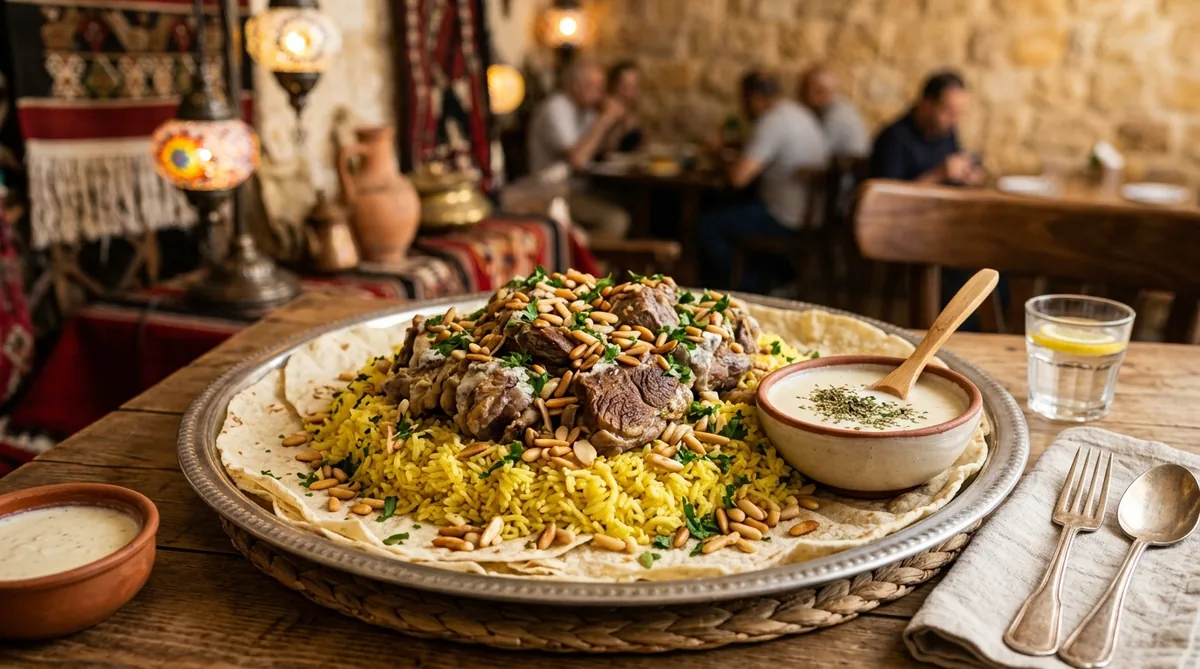
Food is central to daily life and celebration. The national dish is mansaf, tender lamb cooked in jameed (fermented dried yogurt) and served over rice with nuts, traditionally eaten by hand. Mezze dishes such as hummus and mutabbal, street food like falafel and shawarma, and sweets such as knafeh are everyday favourites, and coffee flavoured with cardamom is a symbol of respect and welcome.
Music and dance are part of every wedding and feast: the dabke line dance, folk songs accompanied by the oud, and Bedouin poetry traditions all remain alive. Jordanian society blends these traditions with a modern, urban and young population, and visitors are welcomed into it openly, whether at a family meal, a souk in Amman or a Bedouin camp in Wadi Rum.