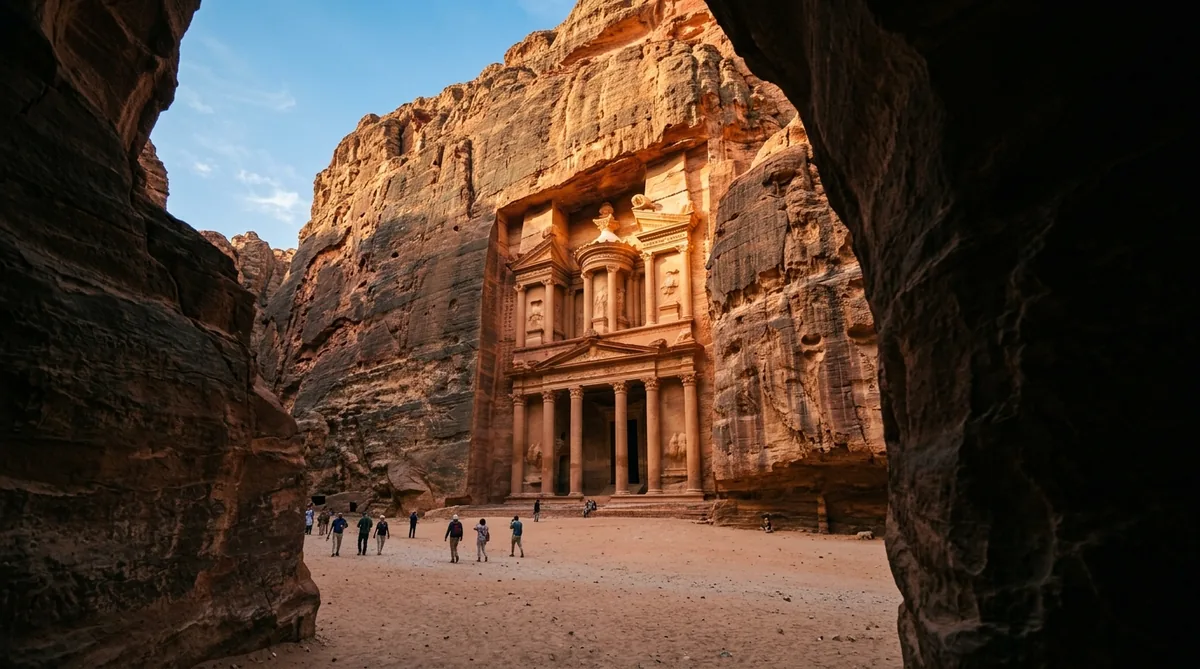
Petra, the ancient capital of the Nabataean kingdom, is without question the crown jewel of tourism in Jordan. Carved directly into rose-coloured sandstone cliffs more than 2,000 years ago, the city was lost to the Western world for centuries until its rediscovery in 1812. Today it is a UNESCO World Heritage Site and one of the New Seven Wonders of the World.
Most visitors enter through the Siq, a dramatic 1.2-kilometre narrow canyon that opens onto the Treasury (Al-Khazneh), Petra's most photographed facade. Beyond it lie hundreds of carved tombs, the Roman-style theatre, the colonnaded street, the Monastery (Ad-Deir) high on the mountain, and panoramic viewpoints best reached at sunrise or sunset.
Give yourself at least one full day — two if you want the Monastery and the back trails. Comfortable shoes, water and sun protection are essential.
Plan your Petra visit
Petra is best approached as a large archaeological landscape rather than a single viewpoint. The Siq, Treasury, Street of Facades, Theatre, Colonnaded Street and Qasr al-Bint form the core route, while the Monastery and higher trails reward visitors who can spend longer in the site.
Allow a full day for the classic route and consider a second day if you want a slower archaeological visit or longer trails. Start early, carry water, wear footwear suitable for uneven stone and shade yourself during the hotter part of the day. Horses, horse-drawn transport and other services operate around the site; agree the service and price clearly before accepting it.
Petra is a UNESCO World Heritage property. For current visitor information and official destination guidance, check the Jordan Tourism Board and UNESCO before your trip.